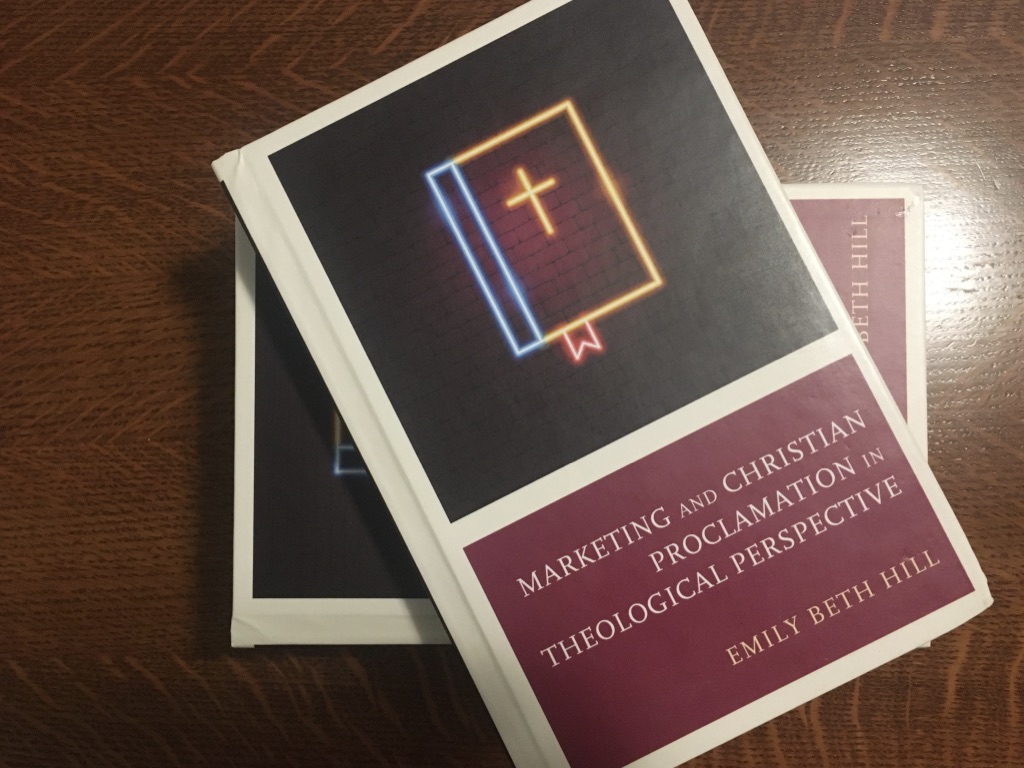
My new book Marketing and Christian Proclamation in Theological Perspective is here! In our market-driven world, the church faces pressing questions as it continues to be formed by the powerful forces of neoliberal capitalism. The book builds on theological examinations of capitalism and consumerism to develop a theology of marketing that addresses two key questions. First, even though church marketing seems to help churches grow amidst a climate of declining church affiliation, should the church use it? Second, considering the church’s indistinguishability from culture in relation to consumption, how should Christians relate to material goods?
I’ve seen a few things online recently that highlight the need to address these questions. A New York Times article this summer highlighted a growing list of partnerships that Facebook had with churches and other religious organizations. Among many interesting things, a pastor referred to congregants as consumers, and Sheryl Sandberg said, “Faith organizations and social media are a natural fit because fundamentally both are about connection.” Is there a natural fit? What is the difference between Facebook and church? More broadly, what is the difference between other marketing platforms and the church–and why does that matter?
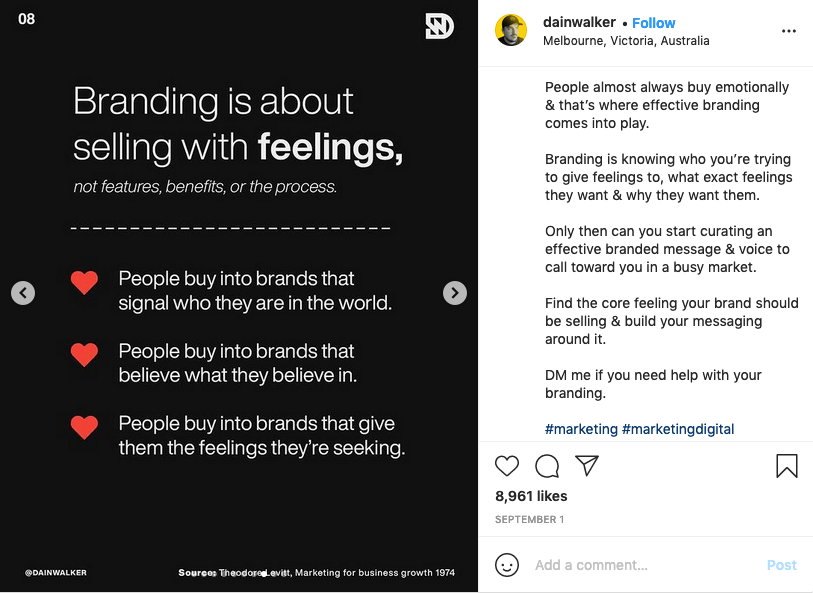
I also saw a recent post by a branding expert on Instagram offering his services, and reminding viewers that people don’t buy things, we buy emotions–and therefore to create an effective branding strategy you need to understand what emotions people want and why, so that you can effectively market your products and brands to them based on that. This raises questions not only for whether churches should use branding (and there are a lot of other branding theories), but how we should relate to the things we buy. See some other thoughts on branding here.
I don’t try to provide black and white answers to all of our questions, but to create a framework to help understand marketing better in relation to our faith, our lives in the world, and the work of the church.
I was excited to have several people read and endorse the book including one of my favorite theologians, William Cavanaugh. Cavanaugh’s research has had a significant impact on mine, and my PhD work largely stemmed from a premise in his book Being Consumed: that consumerism is a morally formative system. If consumerism is a morally formative system, then marketing has to be playing a significant role and I wanted to look into that in more detail. Cavanaugh says of the book:
“Emily Hill demonstrates how thoroughly evangelical is the modern economy: marketing constantly calls, cajoles, demands action of us. In contrast to the anxiety-producing cacophony of marketing messages, Hill proposes the call of God, liberating us to be authentic selves. Meticulously researched and well-argued, this book fills a need for a detailed theological analysis of marketing. Hill demonstrates that all of us are steeped in a highly effective system of formation, and she offers a compelling alternative.”
William T. Cavanaugh, DePaul
The theologian Brian Brock writes:
American pastors have long gravitated to marketing techniques to understand and grow their congregations. This trend is visibly accelerating with the rise of the smartphone and data mining economy. Emily Hill’s deep-dive theological engagement with marketing is urgently needed and long overdue. If you’ve come to think of Jesus as the most successful entrepreneurial leader the world has ever known, this book will not only help you think again–but will show you the gospel afresh.”
Brian Brock, University of Aberdeen
I’m thrilled that my adapted PhD thesis is finally available. I do hope that it one day becomes available in paperback so it’s less expensive, or to write a different version that’s more accessible. In the mean time, if you are interested in a copy, Kevin Hargaden is doing a giveaway on Twitter this week or you can get a 30% discount on the publisher’s website with the code LEX30AUTH21 until the end of the year.
 Emily Beth Hill