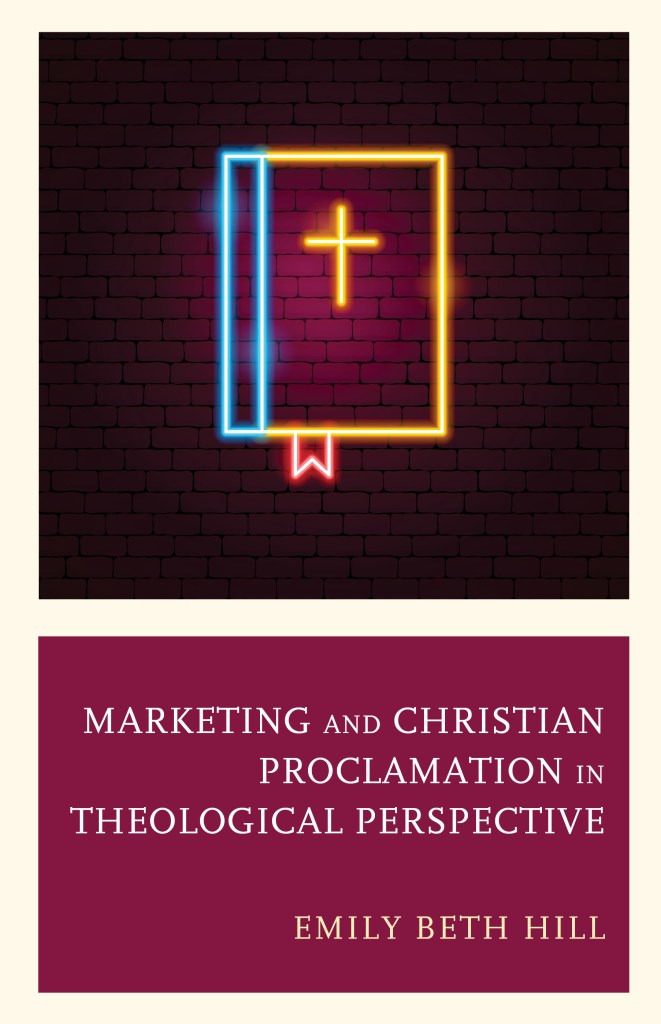
Emily Hill demonstrates how thoroughly evangelical the modern economy is: marketing constantly calls, cajoles, demands action of us. In contrast to the anxiety-producing cacophony of marketing messages, Hill proposes the call of God, liberating us to be authentic selves. Meticulously researched and well-argued, this book fills a need for a detailed theological analysis of marketing. Hill demonstrates that all of us are stepped in a highly effective system of formation, and she offers a compelling alternative.
William T. Cavanaugh, De Paul University
This book does not need inflated hyperbole to sell it but a marketing executive would not be lying if they claimed it can make you smarter, more theologically informed, and a better guest at dinner parties! Informed by years of experience within the industry itself, Emily Hill has drawn deeply on Luther to provide a thorough theological exploration of marketing and its effects. With direct relevance to economics, ecology, and church life, this book is essential for anyone interested in how to think theologically about the age in which we live.
— Kevin Hargaden, Jesuit Centre for Faith and Justice
Overview
In today’s market-driven world, the contemporary church faces pressing questions as it continues to be formed by the powerful forces of neoliberal capitalism. This book builds on theological examinations of capitalism and consumerism to develop a theology of marketing that addresses two key questions. First, even though church marketing seems to help churches grow amidst a climate of declining church affiliation, should the church use it? Second, considering the church’s indistinguishability from culture in relation to consumption, how should Christians relate to material goods?
To address these questions, Emily Beth Hill develops a framework that draws on the concrete practices of marketing (such as focus groups, big data, branding, and advertising) and the trajectory of their use over time, along with Martin Luther’s theology of the Word. Combining Martin Luther’s pro me (“for me”) theology with marketing concepts, Hill shows that while marketing and the gospel have formal pro me similarities, materially they are quite different: marketing operates as a word of law distinct from the effective, liberating word of the gospel proclaimed for us, and thus the two produce different human identities. While existing examinations of capitalism primarily rely on theologies and discourses of desire, Hill reveals that a theology of the Word illuminates a fruitful new area for reflection on how the church can resist the deformations of capitalism.
Buy the book from Lexington/Fortress Academic or on Amazon
“If you’ve come to think of Jesus as the most successful entrepreneurial leader the world has ever known, this book will not only help you think again–but will show you gospel afresh.”
Brian Brock, University of Aberdeen
 Emily Beth Hill